Note: All future reports of Gallopedia will be updated on our web page. This Blog will be mentained for archieving purposes only.


Sunday, May 2, 2010

Gallopedia Highlights- Week # 115

Dated 11-17, 2010

This week report consists of 27 surveys. 2 of these are multi-country surveys, 1 is a Global Survey while the rest are national surveys.

ASIA zone- 4 national polls and 1 Global poll covering:
Middle East & N.Africa: Israel, Palestine, Jordan, Kuwait, Egypt, Turkey, Lebanon

South Asia: Bangladesh, Pakistan, India,

South East Asia- Philippines, Indonesia, Malaysia,

North East Asia: Japan, South Korea

AFRICA zone- 0 national polls & 1 Global Poll covering:

West Africa: Senegal, Mali, Guinea Bissau, Ghana, Liberia, Nigeria,

Central Africa: Tanzania, Rwanda, Cameroon, Chad, Uganda, DR Congo, Ethiopia,

East Africa & Horn of Africa: Kenya, Djibouti

Southern Africa: Zambia, Mozambique, South Africa, Botswana
EURO-AMERICAS zone-20 national polls and 2 Multi-Country Polls & 1 Global poll covering:
East Europe- Poland, Ukraine, Lithuania, Slovakia, Bulgaria, Hungary, Czech Republic, Russia

West Europe- UK, France, Spain, Italy, Germany, Sweden
North America- U.S.A, Canada
Latin America- Brazil

Australasia: Australia

Subjects covered include:
Politics and Elections
Political economy

International Security
Governance

Sovereignty and Nationalism
Social issues/ Health and Disease

Environment


Commentary on Gallopedia Polls Week # 115

Dismantling Settlements Is Creating Polarization in Israel?

Israelis settlements in West Bank have been one of the major hurdles in the resolution of Israeli-Palestinian crisis in accordance with the two state solution. Palestinian views about this issue seem quite clear: an end to these settlements and the eventual creation of a Palestinian state. As opposed to this in Israel the public perceptions regarding this issue have remained rigid against evacuation.

A recent survey[1] in Israel shows a kind of shift in the general Israeli public attitude towards this issue. Opposition to dismantling these settlements has dropped remarkably and support for the idea has reached as high as 60%. This is the highest level of support recorded since 2005. Among the settlers who would be most affected by the dismantling of these settlements, the perceptions on this issue differ remarkably from the general Israeli public. Almost seven in ten (69%) settlers oppose the idea of dismantling these settlements. This is in sharp contrast to general Israeli public. Mistakenly 57% of the settlers believe that general Israeli public is also opposed to the idea of evacuation, which is in fact not true. A large majority of general Israeli public believe that motive for living in settlements should be attached with religious or missionary zeal but the settlers stated that they are more motivated by personal quality of life, housing and community then religious or missionary objectives.

These findings suggest that settlers and general Israeli public have widely different views about dismantling the settlements in Judea and Samaria. Moreover the settlers entertain misperceptions about general Israeli views regarding evacuating West Bank settlements. Does this suggest that general Israeli pubic and settlers are moving towards two different poles? Setters would definitely be the most affected group if Israeli government decides to evacuate, so will this decision create internal groups in public and Israeli politics? On the other hand if Israel continues with these settlements will there ever be peace between Palestinians and Israelis?


[1] http://www.worldpublicopinion.org/pipa/articles/brmiddleeastnafricara/659.php?nid=&id=&pnt=659&lb=

---------------
The complete detailed weekly reports of the project can be found on theGilani Research Foundation website.

Monday, April 26, 2010

Gallopedia Highlights- Week # 114

Dated 4–10 April, 2010

This week’s report consists of 17 national surveys and 1 Global poll.

ASIA zone- 1 national poll covering:
East Asia- Japan

AFRICA zone- 0 national polls:

EURO-AMERICAS zone-16 national polls and 1 global poll covering:
East Europe- Russia, Ukraine, Hungary, Bulgaria, Poland, Czech Republic, Lithuania, Slovakia
West Europe- UK, France
North America- U.S.A, Canada
Latin America- Mexico
Subjects covered include:
Politics and Elections
Political economy
Governance

Sovereignty and Nationalism
Social issues/ Health and Disease

Environment

Commentary on Gallopedia Polls Week # 114

State of Democracy in Hungary

At the eve of 2010 parliamentary elections in Hungary, surveys show the Hungarians disappointment at the state of democracy in their country. Hungarians were among the earliest and most enthusiastic nations to endorse the shift from communism to free market economy and democracy. Twenty years down the line today their perceptions of both the free market economy and democracy the way they experienced it are dismal.[1]

Among the Central and East European countries they are the most dissatisfied nation with democratic institutions and practice. Similarly in a comparative perspective they have the most disappointing image of free market economy today as opposed to the enthusiastic demonstrated two decades ago. They feel they are worse off today than they were under communism. But does this indicate that they are rejecting democracy and free market economy?

Hungarians still highly admire the basic principles of democracy. They believe it is imperative to have multiparty elections, free speech, religious freedom, and civilian control of military in the country. But such values are lacking in their system. Thus they have the spirit to support democracy but suffer from disfunctional democratic institutions in their county, the actual source of their disapproval.

The survey findings bring attention to two significant issues. A strained ethnic and religious relation within Hungary is one of the problems that the nation is facing. A high majority of Hungarians (69%) have an unfavorable view of Roma one of the key ethnic minorities. Similarly a sizable number of Hungarians (33 % & 29%) have an unfavorable view of Romanians and Jews respectively.[2] This reflects a problem that is quite common in African or Asian democracies. The same survey also discovers that Hungary is no exception in the region facing problems of corruption. Over seven in ten states identify corruption as the nation’s most malicious problem.

Hungry as a ‘democracy’ that is just two decades old, with its eyes set on the Euro bloc membership, is it too ambitious a task to set right institutions and nurture a democratic culture in a short period of time?


[1] http://pewresearch.org/pubs/1554/hungary-economic-discontent-democracy-communism
---------------
The complete detailed weekly reports of the project can be found on theGilani Research Foundation website.

Friday, April 16, 2010

Gallopedia Highlights Week # 113

Dated 28 March – 3 April, 2010

This week’s report consists of 22 national surveys.

ASIA zone- 2 single country polls covering:
Middle East & North Africa- Israel
West Asia- Turkey

AFRICA zone- 1 single country poll covering:
Southern Africa- South Africa
EURO-AMERICAS zone-19 single country polls covering:
East Europe- Russia, Ukraine
West Europe- UK, Germany
North America- U.S.A, Canada
Latin America- Brazil
Subjects covered include:
Politics and Elections
Political economy
Governance
Sovereignty and Nationalism
Social issues/ Health and Disease

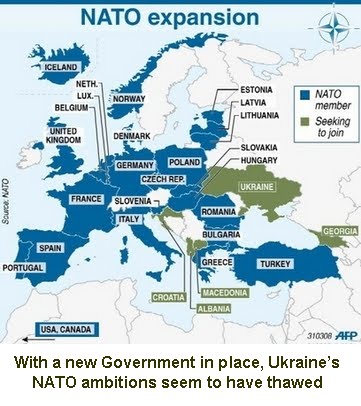
Is Ukrainian ‘No’ to NATO, Part of Russian Resurgence?

Ukraine
has pursued a policy to be part of NATO for six years but the current government of Viktor Yanukovich decided to make a major shift. Ukrainian parliament is going to pass a law that will restrict the nation from joining the military alliance. This government decision also seems to enjoy popular support. A Pew Research Center survey shows that more than half of the Ukrainian respondents have an unfavorable opinion of NATO and they are opposed to their nation’s entry into the force.[1] This opposition is highest in ethnically Russian areas of Ukraine. Somewhat similar are the views about NATO in Belarus, another neighbor of Ukraine and Russia.
The surveys show that Ukrainians have a very positive opinion of Russia. It seems that all immediate neighbors of Russia with the exception of Georgia entertain a favorable inclination towards it, considering its influence positive. The opinions on the Central Asian side are somewhat mixed.
Keeping in view the fact of stabilizing Russian economy and military strength reflected in its foreign policy, Russian resurgence seems to be underway. Will Russia be able to extend its positive image beyond these immediate neighbors in East Europe? Are Russians still thinking of a Greater Russia including integrating some parts of Soviet Union back to its territory? Public support for United Russia has been on the rise for the last few years but can it really be translated into political ambitions? §
---------------
The complete detailed weekly reports of the project can be found on theGilani Research Foundation website.

Thursday, April 15, 2010

Gallopedia Highlights- Week # 112

Dated March 21-27, 2010
This week’s report consists of 20 surveys. One is a multi-country survey conducted by Gallup USA covering 155 countries while the rest are national surveys.
ASIA zone- 4 single country polls covering:
Middle East & North Africa- Palestine territories, Israel
East Asia- Thailand
EURO-AMERICAS zone-15 single country polls and:
East Europe- Russia
West Europe- UK, France
North America- U.S.A, Canada
Latin America- Brazil, Mexico

Global Poll- 1 multi country poll covering cross zonal segments of countries.
· Asia:
Fertile Crescent- Palestine, Lebanon, Iraq, Syria
GCC- UAE, Kuwait, Qatar, Bahrain, Jordan, Saudi Arabia, Yemen
Central Asia- Turkmenistan, Kazakhstan, Uzbekistan, Kyrgyzstan, Azerbaijan, Armenia, Georgia, Mongolia, Tajikistan
West Asia- Iran, Turkey, Afghanistan
South Asia- Pakistan, Bangladesh, Sri Lanka, India, Nepal
East Asia- South Korea, China, Hong Kong, Taiwan, Thailand, Singapore, Myanmar, Malaysia, Indonesia, Japan, Philippines, Vietnam, Laos, Cambodia
· Africa:
North Africa- Libya, Algeria, Tunisia, Egypt, Morocco
West Africa- Nigeria, Cameroon, Mauritania, Ghana, Guinea, Senegal, Liberia, Mali, Ivory Coast, Benin, Niger, Burkina Faso, Sierra Leone, Comoros, Togo
South Africa- Malawi, Botswana, South Africa, Zambia, Namibia, Mozambique, Zimbabwe, Madagascar
East Africa & the horn of Africa- Somaliland, Ethiopia, Kenya, Djibouti
Central Africa- Central African Republic, Angola, Congo, Sudan, Uganda, Tanzania, Chad, Congo, Rwanda, Burundi
· Euro Americas:
Australasia- New Zealand, Australia
Western Europe- Portugal, , UK, France, Spain, Italy, Germany, Luxembourg, Iceland, Ireland, Austria, Greece, Cyprus, Switzerland, Netherlands, Sweden, Norway, Finland, Denmark
Eastern Europe- Poland, Slovenia, Croatia, Montenegro, Moldova, Lithuania, Russia, Ukraine, Romania, Slovakia, Bosnia and Herzegovina, Estonia, Serbia, Macedonia, Hungary, Albania, Latvia, Bulgaria, Kosovo, Belarus, Czech Republic, Malta
North America- Canada, USA
Latin America- Costa Rica, Panama, Brazil, Mexico, Venezuela, Puerto Rico, Colombia, Jamaica, Trinidad and Tobago, Argentina, Belize, El Salvador, Chile, Uruguay, Guatemala, Honduras, Dominican Republic, Bolivia, Ecuador

Subjects covered include:
Politics and Elections
Political economy
Governance
Sovereignty and Nationalism
Social issues/ Health and Disease
International Security
War on Terror

---------------
The complete detailed weekly reports of the project can be found on theGilani Research Foundation website.

Monday, April 5, 2010

Commentary on Gallopedia Polls Week # 111

Dated 14-20 March 2010
This week’s report consists of 25 surveys. Two of these surveys are multi-country while the rest are national surveys.

Water Scarcity and Future of the World
Population growth, urban development, farm production, and climate change is increasing competition for fresh water and producing shortages so acute that virtually every industry in the world anticipates sweeping systemic transformation over the next decade in their strategic planning, production practices, and business models. This is the conclusion of a Globescan leaders survey on water scarcity.[1]
It suggests that water scarcity will have profound impacts on global businesses. Other than business and economy the water crisis will have significant political and social consequences as well. It can be easily comprehended that increasing gap between fresh water supply and demand will lead to several issues with in nations and conflicts between neighboring nations. These conditions possess potential to bring world wide changes; Industries locations might change towards places where fresh water supply is ensured, hydro power projects might suffer resulting in energy disorders and severe impact on economies, farming cycles disorder will lead to famines, drastically effecting social life styles. These conditions spell catastrophe and perhaps may even perpetuate an end to the modern world as we know it.
The situation definitely demands a more responsible reaction from all institutions involved as well as citizens at an individual level. Is the degree of awareness and effort (including the recent Copenhagen conference that widely disappointed the world) commensurate with the degree of attention that it demands? §
---------------
The complete detailed weekly reports of the project can be found on theGilani Research Foundation website.

Commentary on Gallopedia Polls Week # 110

Dated 7-14 March 2010
This week’s report consists of 23 surveys. Four of these are multi-country surveys while the rest are national surveys.

Disapproval of Taliban: Disapproval of violence in Pakistan & Afghanistan?
Last week Gallup USA survey made headlines in newspapers regarding the increasing unpopularity of the Taliban in Pakistan and Afghanistan.[1] The survey shows that there is very little support left for the ‘Taliban’ among the populations of these two countries. This is especially true of Pakistan according where just 4 percent of the people still believed that the ‘Taliban’ have a positive impact in some areas of the country. Meanwhile almost 8 in ten said they have a damaging affect on the country. To what extent can this be considered a victory for U.S? is it depictive of a pro national sentiment in Pakistan that sides with the government and the military operations in the north and along the western borderlands.
Pakistanis witnessed the deadliest attacks in the year 2009 after the military launched its campaign against the ‘Taliban’ in South Waziristan. Hundreds of people lost their lives in suicide and car bomb blasts in almost all the major cities of Pakistan. North West Frontier province was the worst hit, where consequently the support for the Taliban has sharply fallen. Baluchistan was least affected by the wave of violence; as the survey depicts, still a quarter of the residents see some positive aspects of the Taliban.
Disapproval of the Taliban cannot perhaps be directly translated as approval of the U.S or the war on terror. Perhaps even the approval of Pakistani military offensive against the Taliban would be too ambitious an assumption. This is evident in surveys depicting a further decline in U.S. favorability ratings in Pakistan[1] and Afghanistan[1]. These subtle dichotomies are relayed in the sentiment that disapproves of military offensive, by national as well as international forces, as the sole strategy in effect. The recent Afghanistan conference in the UK that outlined a tentative ‘exit strategy’(if not exactly in those terms), perhaps shows an inclination towards softer strategy tools that perhaps would sit well with popular opinion among the domestic audience. §
---------------
The complete detailed weekly reports of the project can be found on theGilani Research Foundation website.

Commentary on Gallopedia Polls Week # 109

Dated 27 Feb-6 March 2010
This week’s report consists of 23 national surveys.

Christmas Day Attack and the Fate of Nigeria
On Christmas day a Nigerian made a failed attempt to blow Detroit bound airliner. This has been widely condemned across the world including Nigeria as well. Overwhelming majority of Nigerians condemned Umar Faruk Abdulmatlab and feel that this will have a negative impact on the image of Nigeria in the world.[1] Nigeria’s extended leadership vacuum where the nation’s premier until recently was out of the country for medical reasons, has not provided credible political and diplomatic interaction. Moreover the relations between Nigeria and US have been strained over the past year. This is coupled with the fact that Nigerian is the second Muslim country after Palestinian territories where there is a high support for suicide attack.[1] Eventually United States blacklisted Nigeria.
Nigeria’s international image too has suffered a serious blow. The nature of terrorism these days is transnational just as the issue of climate change or financial crisis. Often states are not backing the terrorists which seem to be the case in Nigeria as well. But the states or nations have to pay for the acts that have been committed by groups or individuals associated with their territories.
Keeping in view the fact that U.S. blacklisted Nigeria for genuine apprehensions, how efficacious is this move in actuality. Will not isolating weak states actually aggravate the situation? §
---------------
The complete detailed weekly reports of the project can be found on theGilani Research Foundation website.